

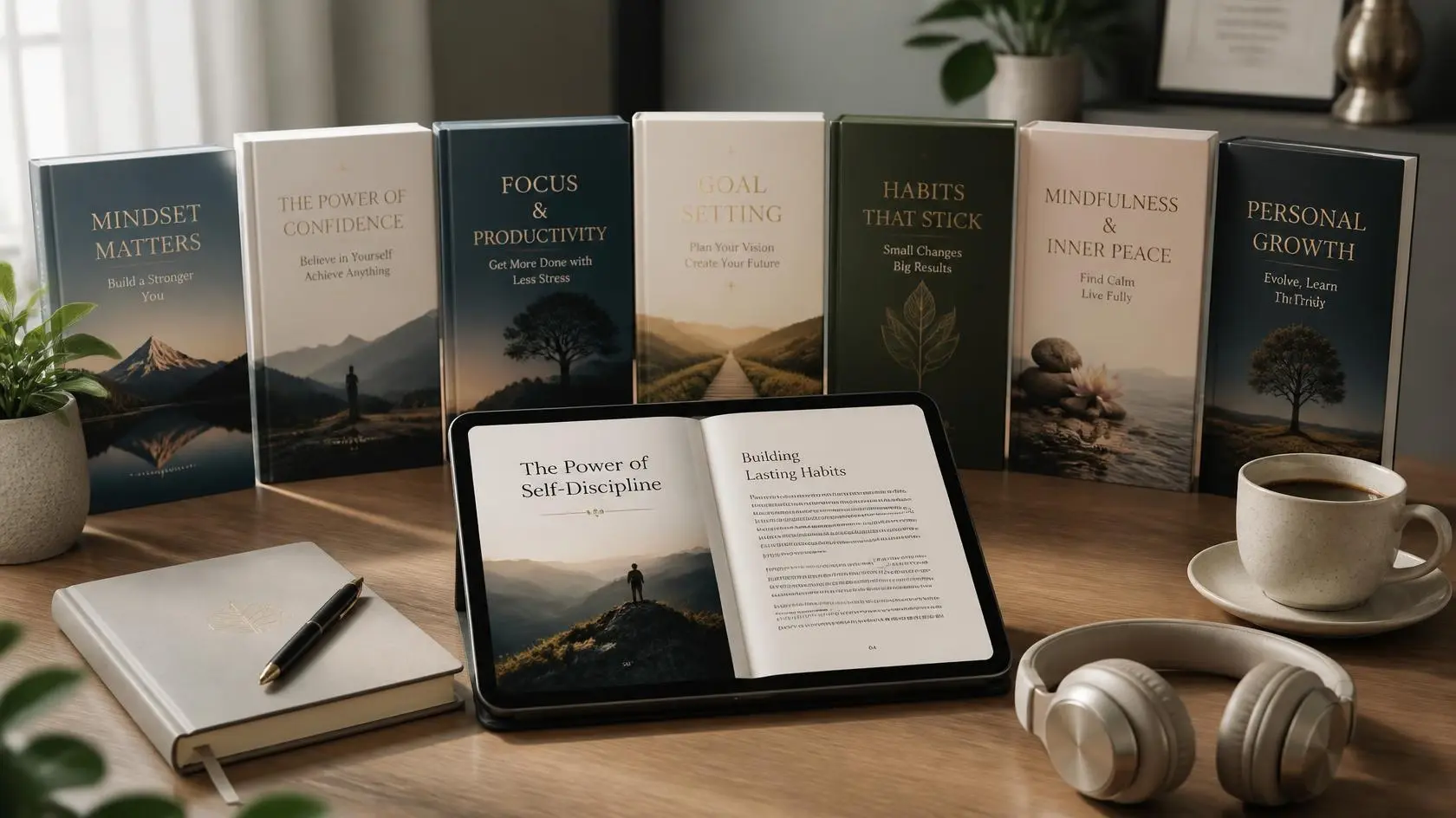
Digital product ebooks have become one of the most accessible ways to package knowledge and share it with a paying audience. A cooking instructor can turn recipes into a downloadable collection. A financial coach can compile a budgeting workbook. A photographer can publish a beginner’s guide to lighting.
The appeal is easy to see. You create the product once, and it can be delivered to any number of customers without printing, shipping, or storage. But easy to distribute does not mean easy to do well. Many ebooks fail because of a weak topic, poor formatting, or no plan for reaching readers.
This guide covers the full process in plain terms. You will learn what digital product ebooks are, which types exist, how to plan and design one, where to sell it, and how to price it. It also covers common mistakes and answers frequently asked questions. The goal is balanced, practical information, including the limitations, so you can decide whether this format suits your project.
What Are Digital Product Ebooks?
A digital product ebook is an electronic book or guide sold or distributed as a downloadable file. Unlike a physical book, it exists only in digital form and is read on phones, tablets, computers, or e-readers.
The phrase “digital product ebooks” usually points to something slightly broader than a traditional novel or nonfiction book. It often includes:
- Short guides and how-to manuals
- Workbooks and templates with fillable sections
- Checklists, planners, and printable resources
- Recipe collections and lookup guides
- Industry reports and white papers
Length varies widely. Some are 10-page checklists. Others are 200-page reference books. What they share is that the customer receives a file, usually PDF or EPUB, after purchase or sign-up.
How they differ from traditional ebooks
The line between “ebook” and “digital product” is blurry, but the difference is mostly about purpose. A traditional ebook is typically a book that happens to be in digital form, often sold through a retailer’s catalog. A digital product ebook is more often a practical resource created by an expert, a small business, or an educator, and sold directly or used to support another offering.
Why Digital Product Ebooks Appeal to Creators
Several practical reasons explain why so many people consider this format.
Low production cost. Most of the investment is time. Writing tools, design templates, and basic editing software are widely available, and some are free.
No inventory or shipping. Once the file is finished, delivery can be automated. This reduces ongoing work and removes physical logistics.
Scalability. The same file can be sold to ten readers or ten thousand. This is why ebooks are often associated with passive income, though that phrase deserves some caution, as discussed below.
Authority building. A well-made guide demonstrates expertise. Consultants, coaches, and freelancers often use ebooks to show what they know.
Audience building. A free ebook offered in exchange for an email address is a common lead magnet, helping creators grow an email list.
The honest downsides
Balanced information matters here. Digital product ebooks also come with real challenges:
- Crowded market. Many topics already have dozens of free and paid guides.
- Marketing effort. “Passive” income is rarely passive at the start. Most sales depend on consistent promotion.
- Piracy risk. Files can be shared without permission, and protection methods are imperfect.
- Perceived value. Some readers expect ebooks to be cheap or free, which can limit pricing.
- Quality expectations. Readers notice typos, weak structure, and thin content quickly.
Recognizing these points early helps you plan realistically instead of relying on optimistic claims.
Common Types of Digital Product Ebooks
Different formats serve different goals. The table below compares the most common types.
| Type | Typical length | Best for | Main consideration |
|---|---|---|---|
| Guide or how-to | 30–100 pages | Teaching a skill step by step | Needs clear structure and examples |
| Workbook or planner | 20–80 pages | Interactive learning, habit tracking | Design and usability matter most |
| Checklist or cheat sheet | 1–10 pages | Quick reference, lead magnets | Low perceived value if sold alone |
| Recipe or resource collection | 30–150 pages | Hobby and lifestyle audiences | Photography and layout are important |
| Report or white paper | 15–50 pages | Professional and business readers | Requires credible research and sources |
| Narrative nonfiction or fiction | 100+ pages | Traditional ebook readers | Often better suited to retail platforms |
If you are new to this, starting with a short, focused guide is usually more realistic than a long book. It takes less time to finish, and you can learn from reader feedback before committing to bigger projects.
How to Choose a Topic for Your Digital Product Ebook
The topic decides more than any design choice. A strong subject sits where three things overlap: what you know, what people want, and what is not already covered well.
Start with a specific problem
Broad topics such as “fitness” or “marketing” are hard to stand out in. Narrow, problem-based topics tend to work better. “A 4-week strength routine for beginners with limited equipment” is easier to understand and easier to find than “workout guide.”
Check for real demand
You do not need expensive tools to test interest. Simple methods include:
- Searching your topic and reviewing what already exists
- Reading questions on forums, social groups, and Q&A sites
- Looking at reviews of competing ebooks to spot complaints
- Asking your existing audience or customers what they struggle with
- Using free keyword tools to see what people search for
Look for gaps, not just popularity
A crowded topic is not automatically a bad sign, since it shows demand. What matters is whether you can offer something distinct: a clearer method, a specific audience, better examples, or more current information.
Planning and Writing Your Digital Product Ebook
Good planning saves weeks of rewriting. Before you write a full draft, settle a few basics.
Define the reader and the outcome
Write one sentence describing who the ebook is for and what they will be able to do after reading it. If you cannot state that clearly, the content will likely wander.
Build an outline first
A simple outline usually includes:
- An introduction that explains the problem and promise
- Three to eight main sections, each covering one idea
- Examples, exercises, or case studies within sections
- A summary with clear next steps
Keep sections in a logical order so the reader progresses naturally.
Write in short, clear sections
Digital readers scan more than print readers. Short paragraphs, descriptive headings, and bullet lists help. Avoid padding, because length alone does not make an ebook more valuable. A focused 40-page guide often serves readers better than a bloated 120-page one.
Support claims with reliable information
If your ebook includes statistics, health advice, financial guidance, or legal information, verify facts against reputable sources and cite them. For sensitive subjects, consider adding a note that the content is educational and not a substitute for professional advice.
Edit before you publish
Editing is where quality is decided. A practical process:
- Let the draft rest for a few days
- Revise for structure and clarity first
- Proofread for grammar and spelling separately
- Read the text aloud to catch awkward phrasing
- Ask one or two people from your target audience to review it
Professional editors and proofreaders are available for hire, and many creators find the cost worthwhile for a paid product.
Designing and Formatting Digital Product Ebooks
Design affects how professional your ebook feels and how easy it is to read.
Choose the right file format
The two most common formats serve different purposes.
| Feature | EPUB | |
|---|---|---|
| Layout | Fixed, looks the same on every device | Reflowable, adapts to screen size |
| Best for | Workbooks, guides with graphics, printables | Text-heavy books read on e-readers |
| Interactivity | Supports fillable forms and links | Limited, depends on the reading app |
| Ease of creation | Simple with common design tools | Requires conversion or specialist software |
| Reader experience on phones | Can require zooming | Generally more comfortable |
Many creators offer both formats when the content suits it. For visual, template-heavy products, PDF is often the practical choice. For long-form reading, EPUB tends to give a better experience.
Basic design principles
- Readable fonts: Use one or two typefaces, with body text large enough for screens.
- Consistent layout: Keep margins, headings, and colors uniform.
- White space: Avoid crowded pages, which tire the eye.
- Helpful visuals: Use images, diagrams, or charts only when they clarify something.
- A clickable table of contents: This makes navigation easy on any device.
- A clear cover: The cover is the first thing buyers see, so keep it simple and legible even at thumbnail size.
Tools people commonly use
There are many options at different skill and budget levels. Word processors such as Google Docs or Microsoft Word can export to PDF. Design platforms such as Canva offer ebook templates. Adobe InDesign gives detailed control for advanced layouts. Formatting programs such as Vellum, Atticus, and Calibre help produce EPUB files. Which is best depends on your budget, the complexity of your layout, and your comfort with software.
Where to Sell Digital Product Ebooks
There is no single best place to sell an ebook. Each approach involves trade-offs in fees, control, audience reach, and customer data.
| Option | Examples | Advantages | Trade-offs |
|---|---|---|---|
| Retail marketplaces | Amazon Kindle Direct Publishing, Apple Books, Kobo | Built-in audience, established payment systems | Less control over pricing and customer data; category competition |
| Creator sales platforms | Gumroad, Payhip, Sellfy | Simple setup, direct delivery, sell PDFs easily | You must bring your own traffic; platform fees apply |
| Online course and membership platforms | Teachable, Kajabi, Podia | Useful if bundling ebooks with courses | Often higher monthly costs |
| Ecommerce stores | Shopify, WooCommerce, Squarespace | Full brand control, own customer data | More setup and maintenance |
| Handmade and template marketplaces | Etsy | Existing shopper traffic for printables and planners | Crowded categories; marketplace rules and fees |
| Your own website | Any site with a payment tool | Complete control and direct relationship with buyers | Requires marketing to attract visitors |
Fee structures, royalty rates, and rules change over time, so check each platform’s current terms before deciding. Some platforms, for example, offer different royalty tiers depending on price or format.
Selling in more than one place
Some creators combine channels: a marketplace for discovery and their own website for direct sales. This can broaden reach but adds administrative work, such as updating files and tracking sales in several places. Your own website is one option among these, and often works best alongside other channels rather than replacing them.
Pricing Digital Product Ebooks
Pricing is partly research and partly experimentation. There is no universal formula, but a few principles help.
Factors to consider
- Depth and usefulness: A detailed, actionable guide can justify a higher price than a short overview.
- Audience type: Professionals buying a niche report often pay more than casual hobby readers.
- Competition: Review comparable products to understand typical price ranges.
- Format and extras: Bonus templates, worksheets, or updates can add value.
- Sales channel: Some marketplaces have pricing bands tied to royalty rates.
General price ranges
As a rough orientation only, short guides and checklists often sell for a few dollars, while comprehensive guides, workbooks, or professional reports may be priced higher. Specialized business or technical resources sometimes command premium prices because they save readers significant time or money. These ranges vary heavily by niche, so treat them as starting points, not rules.
Ways to test and adjust
- Launch at an introductory price, then adjust as you learn
- Offer bundles of related products
- Compare conversion rates at different price points over time
- Read customer feedback to gauge whether value matches price
Avoid pricing purely on cost of production. Readers pay for the outcome, not the hours you spent.
Marketing Digital Product Ebooks Without Being Pushy
Even an excellent ebook needs visibility. Fortunately, useful, low-pressure approaches tend to work well for information products.
Build trust through helpful content
Blog posts, videos, newsletters, and social media posts that address your topic show readers your expertise. A sample chapter or a short free version lets people judge quality before buying.
Grow an email list
Email remains a dependable way to reach interested readers. Offering a free checklist or sample chapter in exchange for an email address creates a group of people who already care about your subject. Follow privacy rules in your region and make it easy to unsubscribe.
Use search visibility
Write clear product descriptions using the terms readers actually search for. Include a concise summary, who the ebook is for, what is covered, and the file format. Honest descriptions reduce refunds and disappointment.
Collect and share reviews
Reviews and testimonials help new buyers decide. Ask satisfied readers for feedback and respond professionally to criticism.
Collaborate and partner
Guest posts, podcast appearances, and partnerships with complementary creators can introduce your work to relevant audiences. Choose partners whose readers genuinely overlap with yours.
Be realistic about timelines
Most ebooks do not sell heavily in the first weeks without an existing audience. Sustainable results usually come from steady effort, improvement based on feedback, and patience.
Legal and Practical Considerations
Before selling, cover a few essentials. This is general information rather than legal advice, so consult a qualified professional for your situation.
- Copyright: Only use text, images, and fonts you created or have licensed. “Free to view online” does not mean “free to use commercially.”
- Licensing terms: State how buyers may use the file, such as personal use only or no redistribution.
- Taxes: Digital goods can carry sales tax or VAT obligations depending on where you and your customers are located. Some platforms handle this for you, others do not.
- Refund policy: Digital products are often non-returnable, but many sellers still set clear refund terms.
- Privacy: If you collect email addresses or payment details, follow applicable data protection rules.
- Disclaimers: Health, finance, and legal content should include appropriate notices.
- ISBNs: Retail marketplaces sometimes require or recommend them, while direct sales usually do not. Requirements vary by platform and country.
Common Mistakes to Avoid
Many first-time ebook projects run into the same problems:
- Choosing a topic that is too broad. Specific beats general.
- Skipping editing. Errors damage credibility fast.
- Overloading with filler. Padding lowers perceived value.
- Ignoring mobile readability. Test on a phone and a tablet.
- Underestimating marketing. Publishing is the start, not the finish.
- Copying competitors too closely. Differentiation matters.
- Unclear descriptions. Vague listings lead to mismatched expectations.
- Never updating. Outdated information hurts trust, especially in fast-changing fields.
Avoiding these does not guarantee success, but it removes the most common obstacles.
Frequently Asked Questions
What are digital product ebooks?
They are electronic books or guides delivered as downloadable files, usually PDF or EPUB. They often take the form of practical resources such as guides, workbooks, templates, and reports.
How long should a digital product ebook be?
There is no fixed rule. Many successful examples run between 20 and 100 pages. The right length is however many pages it takes to solve the reader’s problem clearly, without filler.
Do I need a professional designer?
Not always. Many creators use templates and design tools to produce clean layouts. A designer can help for complex, image-heavy, or brand-sensitive projects, and it is often worth considering for the cover.
Which format is better, PDF or EPUB?
PDF suits fixed layouts, workbooks, and printables. EPUB suits long, text-focused reading on e-readers and phones. Offering both can work for some titles.
Can I make money from ebooks?
Some people do, but results vary widely. Income depends on topic, quality, audience size, pricing, and marketing. It is usually best to treat early sales as feedback rather than a guarantee.
Is selling on a marketplace better than selling on my own site?
Neither is universally better. Marketplaces offer existing traffic but less control. Your own site offers control and customer relationships but requires you to attract visitors.
How do I protect my ebook from piracy?
Options include watermarking, limited-download links, and license terms. No method is foolproof, and heavy restrictions can frustrate honest buyers. Many creators focus on value and customer experience instead.
Do I need an ISBN?
For direct sales, usually not. Some retail platforms require or recommend one, and rules vary by country and platform, so check their guidelines.
How often should I update an ebook?
Review it at least once a year, or sooner if the subject changes quickly. Updating keeps the content accurate and can encourage repeat readers.
Conclusion
Digital product ebooks offer a flexible way to share expertise, build an audience, and create a product that scales without physical inventory. Their strengths are low production costs, easy delivery, and the ability to reach readers anywhere.
They also demand honest effort. A clear topic, careful writing, thoughtful design, sensible pricing, and steady marketing all shape the outcome. The market is competitive, and results are never guaranteed, but a focused, well-made ebook aimed at a specific problem has a real chance of finding its audience.
If you are just starting, keep the first project small. Choose a narrow topic, finish a concise guide, gather feedback, and improve from there. Each ebook teaches you something that makes the next one better.
Ready to take the next step? Review the sales options above, sketch a simple outline for your first guide, and see what fits your goals. If you would like more resources or support along the way, you are welcome to explore [your website name] as one of the many options available.